- 3001 Red Hill Ave Building 6 Suite 210, Costa Mesa, CA 92626
- info@afridi-document-preparer.com
- Book Appointment


Power Of Attorney Definition: Types, Duties, And Limits
A power of attorney definition centers on one core concept: granting someone you trust the legal authority to act on your behalf. This document allows another person, called an agent or attorney-in-fact, to make decisions and handle matters when you cannot or choose not to do so yourself. Whether you're planning for potential incapacity, managing affairs while traveling, or simply need someone to handle specific transactions, understanding how this legal tool works is essential for protecting your interests and your family's future.
At Afridi Document Preparer, we help California residents create estate planning documents, including powers of attorney, as part of our affordable document preparation services. We see firsthand how confusion about these documents can leave people vulnerable or unprepared. The good news: once you understand the basics, choosing the right type of power of attorney becomes much clearer.
This article breaks down the different types of powers of attorney available, explains the specific duties and responsibilities of everyone involved, and outlines the legal limits that govern these arrangements. By the end, you'll know exactly what a power of attorney can and cannot do, and whether preparing one belongs on your to-do list.
Why a power of attorney matters
Your ability to make decisions and handle your own affairs can disappear in an instant. A stroke, accident, or sudden illness can leave you unable to communicate, sign documents, or manage your finances. Without a power of attorney already in place, your family faces a stressful, expensive court process called conservatorship to gain legal authority over your affairs. This process takes months, costs thousands of dollars, and requires ongoing court supervision. A properly prepared power of attorney prevents this entire ordeal by naming your chosen person in advance.
Without proper planning, even your spouse may need court permission to access joint accounts or sell property in your name.
Beyond medical emergencies, you might simply need someone to handle matters while you're unavailable. Military deployment, extended travel, or physical limitations can all create situations where having a trusted agent becomes essential. Your agent can pay bills, deposit checks, manage rental properties, or handle time-sensitive transactions that cannot wait for your return. The power of attorney definition includes this practical flexibility, making it a tool for both crisis planning and everyday convenience.
Protection during incapacity
Dementia and Alzheimer's disease affect millions of Americans, gradually eroding the ability to make sound decisions. If you wait until symptoms appear, you've likely already lost the legal capacity to create a valid power of attorney. Creating one while you're healthy ensures your chosen person can step in smoothly when needed. Your family avoids guardianship court proceedings, which strip away your autonomy and place control in the hands of a judge rather than someone you personally selected.
Convenience for everyday situations
You don't need a crisis to benefit from a power of attorney. Real estate closings, business transactions, or banking matters sometimes require in-person signatures when you're out of state or physically unable to attend. Your agent can sign documents, negotiate on your behalf, and complete transactions according to your instructions. This practical tool saves you time, money, and frustration in routine situations that would otherwise require your physical presence.
Types of power of attorney you can create
California law recognizes several distinct types of powers of attorney, each designed for different situations and levels of authority. Your choice depends on how much control you want to grant and how long that authority should last. The power of attorney definition stays consistent across all types, but the scope and duration change dramatically based on which form you select. Understanding these differences helps you create a document that matches your specific needs without granting more authority than necessary.

General vs. limited powers
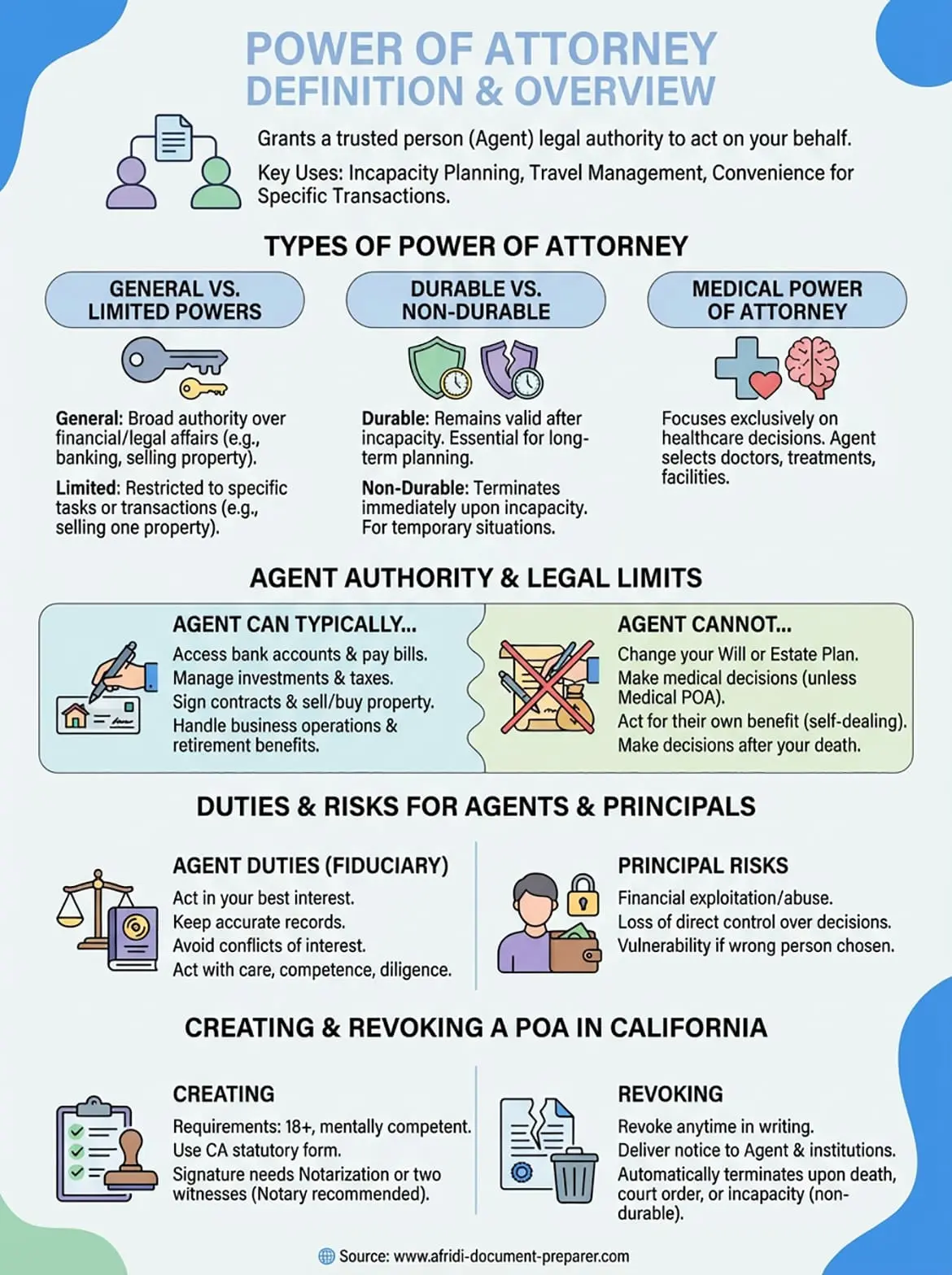
A general power of attorney gives your agent broad authority to handle virtually all your financial and legal affairs. Your agent can access bank accounts, sell property, manage investments, file taxes, and sign contracts in your name. This comprehensive authority makes sense when you need someone to fully manage your affairs during extended absence or progressive illness.
Limited powers of attorney restrict your agent to specific tasks or transactions. You might authorize someone to sell one particular property, handle a single business deal, or manage only certain bank accounts. These focused documents protect you by preventing your agent from accessing other areas of your life while still accomplishing the necessary task.
Durable vs. non-durable options
Durable powers of attorney remain valid even after you become incapacitated, making them essential for long-term planning. Without the durable designation, your power of attorney automatically ends if you lose capacity, defeating the entire purpose of having one.
Most estate planning attorneys recommend durable powers as the default choice for anyone planning ahead.
Non-durable versions terminate immediately upon your incapacity. These work only for temporary situations where you remain mentally competent but physically unavailable.
Special-purpose powers of attorney
California also recognizes medical powers of attorney, which focus exclusively on healthcare decisions rather than financial matters. Your agent makes treatment choices, selects doctors, and decides on care facilities when you cannot communicate your own wishes.
What an agent can and cannot do
Your agent's authority depends entirely on what your power of attorney document specifies. California law allows you to grant broad powers or restrict your agent to narrow tasks, giving you complete control over the scope of authority. The power of attorney definition includes this flexibility, but many people create documents without understanding exactly what they're authorizing. Knowing these boundaries protects both you and your agent from legal problems down the road.

Powers your agent typically holds
Financial agents can access your bank accounts, pay bills, manage investments, and handle tax matters when your document grants these specific powers. Your agent can sign contracts, sell or purchase real estate, manage rental properties, and conduct business transactions in your name. California's statutory form lists specific powers you can check off, including real estate transactions, insurance matters, retirement benefits, and business operations. You decide which boxes to check based on what your agent actually needs to accomplish.
Your agent cannot change your will, make medical decisions (unless the document specifically covers healthcare), or override choices you make while still competent.
Legal limits on agent authority
Your agent cannot act for their own benefit unless your document explicitly allows self-dealing. They cannot gift your property to themselves, change beneficiary designations on your accounts, or alter your estate plan. California law prohibits agents from making decisions after your death, meaning they cannot authorize funeral arrangements or handle estate distribution. Those responsibilities belong to your executor or trustee, not your power of attorney agent.
Duties and risks for agents and principals
Creating a power of attorney creates serious legal obligations and potential problems for both parties involved. Your agent becomes a fiduciary, meaning they must act in your best interest and follow strict legal duties. Meanwhile, you face real risks when you grant someone authority over your finances or healthcare decisions. Understanding both sides of the power of attorney definition helps you prepare appropriate safeguards and select the right person for this critical role.
Fiduciary duties agents must follow
Your agent must keep accurate records of every transaction they make on your behalf and provide accounting when you or your family requests it. They cannot mix your money with their own, make decisions that benefit themselves instead of you, or use your assets for unauthorized purposes. California law requires agents to act with care, competence, and diligence, meaning they must make informed decisions and avoid reckless choices with your property. Agents who breach these duties face personal liability for any losses you suffer, and serious violations can result in criminal charges.
An agent who steals from you or acts for personal gain faces both civil lawsuits and potential criminal prosecution under California elder abuse laws.
Risks principals face
You risk financial exploitation when you grant broad powers to someone who later abuses their authority. Even trusted family members sometimes drain accounts, sell property without permission, or make unauthorized gifts to themselves. You lose direct control over important decisions once your agent begins acting under your power of attorney, creating vulnerability if you selected the wrong person or your relationship changes over time.
How to set up, use, and revoke a POA in California
California requires your power of attorney to meet specific legal requirements before courts and institutions will accept it. You must be at least 18 years old and mentally competent when you create the document. Your signature needs notarization or two witnesses who are not related to you or named as agents. Most banks, title companies, and healthcare facilities demand notarization regardless of the witness option, making a notary the practical choice for ensuring acceptance.
Creating a valid power of attorney
California provides a statutory form in Probate Code Section 4401 that satisfies all legal requirements when completed correctly. You must clearly identify yourself and your agent, specify which powers you grant, and indicate whether the document is durable. Document preparation services like Afridi Document Preparer help you complete these forms accurately without paying attorney fees, ensuring your power of attorney definition matches your actual intentions.
A poorly drafted power of attorney may be rejected by banks or healthcare providers, leaving your agent unable to help when you need them most.
Revoking or terminating authority
You can cancel your power of attorney anytime by putting your revocation in writing and delivering it to your agent and any institutions that received the original. Your power of attorney also terminates automatically when you die, a court appoints a conservator, or (for non-durable versions) when you become incapacitated. Destruction of the original document does not legally revoke it, so proper written notice protects you from an agent continuing to act after you've withdrawn their authority.
Final thoughts
Understanding the power of attorney definition gives you control over who makes decisions when you cannot. This single document prevents family conflict, expensive court battles, and the loss of autonomy during medical emergencies or periods of incapacity. You protect yourself by choosing your agent carefully, specifying exactly what powers you grant, and ensuring your document meets California's legal requirements.
Creating a valid power of attorney does not require an attorney. Document preparation services provide the accuracy you need at a fraction of the cost, helping you complete statutory forms correctly while maintaining complete control over your affairs. Your family deserves the security that comes from proper planning, and you deserve the peace of mind that your wishes will be respected and followed when it matters most.
Afridi Document Preparer helps California residents prepare estate planning documents, including powers of attorney, living trusts, and wills. Our affordable document preparation services ensure your paperwork meets all legal requirements without expensive attorney fees.
Disclosure: The information provided in this article is for general informational purposes only and does not constitute legal advice. The author is not a licensed attorney. The content should not be construed as professional legal advice or a substitute for professional legal counsel. No attorney-client relationship is formed by reading or interacting with this article. The information presented may not reflect the most current legal developments, and laws and regulations can vary by jurisdiction and may change over time. Readers should not act or refrain from acting based on the information in this article without first seeking appropriate legal or other professional advice. Always consult a qualified attorney for advice regarding your specific legal matter or circumstances. The author expressly disclaims all liability in respect of actions taken or not taken based on any or all of the contents of this article.
